101 vs 201
101 is the standard table; 201 is the longer variant. Same rules, slower bleed, bigger pools.
The format where one bad hand costs little and discipline compounds. A reader-first reference for 101 / 201 pool play.
Pool rummy is the multi-deal cousin of points rummy. Instead of paying per hand, players carry a running score across deals; once your total crosses the elimination threshold (101 or 201 points depending on the table), you are out. The last player alive wins the pool.
This single change reshapes every decision. A drop in points rummy burns a stake; a drop in pool rummy burns a small number of points from a much larger envelope. Over many deals, that smaller exposure is the format's real promise. Variance is not eliminated — nothing in skill-card games does that — but it is distributed across a longer horizon.
This chapter covers how pool rummy is structured, what changes about drop discipline, and where the format sits in a reader's repertoire.
101 is the standard table; 201 is the longer variant. Same rules, slower bleed, bigger pools.
First-drop, middle-drop and full-hand counts differ. Read your operator's drop table before you assume one.
Cross 101 (or 201) and you are out for the round. The survivor wins the pool.
Up to two decks plus jokers in 6-player tables. The joker becomes a meaningful resource.
In pool rummy, the discard pile matters less than opponent tendencies. The player who drops at 60 every time is telling you something. The player who never drops is telling you something else. Logs matter more than reads.

A first-drop in 101 pool is a 20-point charge against a 101 ceiling. That is roughly a fifth of your envelope on a single bad draw. A middle-drop is more. Knowing the cost is the entire decision.

First-drop, middle-drop and max-count vary between 101 and 201 tables. Confirm your operator's table before you assume one. The difference between a 20 and a 25 first-drop compounds across a session.
The pool is the entry fee multiplied by the surviving players when the round ends. Bigger pools invite longer sessions; smaller pools turn the format into something closer to points.
The button rotates per deal. Knowing the draw order is more useful in pool than in points because the same seat position recurs more often.
One bad hand is small; the law of large numbers does the rest.
Over-aggression at chip pressure costs you across many hands, not in one.
Pool runs longer than points. Plan your session cap accordingly.
Bankroll structure and drop discipline matter more than any single discard read.
Pool rummy rewards patience more than flash. A reader who treats every deal as a fresh tournament will bleed points through over-aggression; a reader who treats the evening as one continuous decision tree will usually leave with a clearer ledger. The practical difference is structure. Before the first deal, set three numbers: the maximum points you will accept before a first-drop, the score gap at which you switch from building melds to denying cards, and the clock time at which you walk away regardless of stack size.
Those three numbers turn a vague play-carefully slogan into a checklist you can follow when the table gets loud. The first-drop threshold protects your envelope when the opening draw is dead. The denial threshold stops you from chasing a pure when an opponent is already one turn from declaration. The clock protects the rest of your week from a session that has already taught you what it was going to teach.
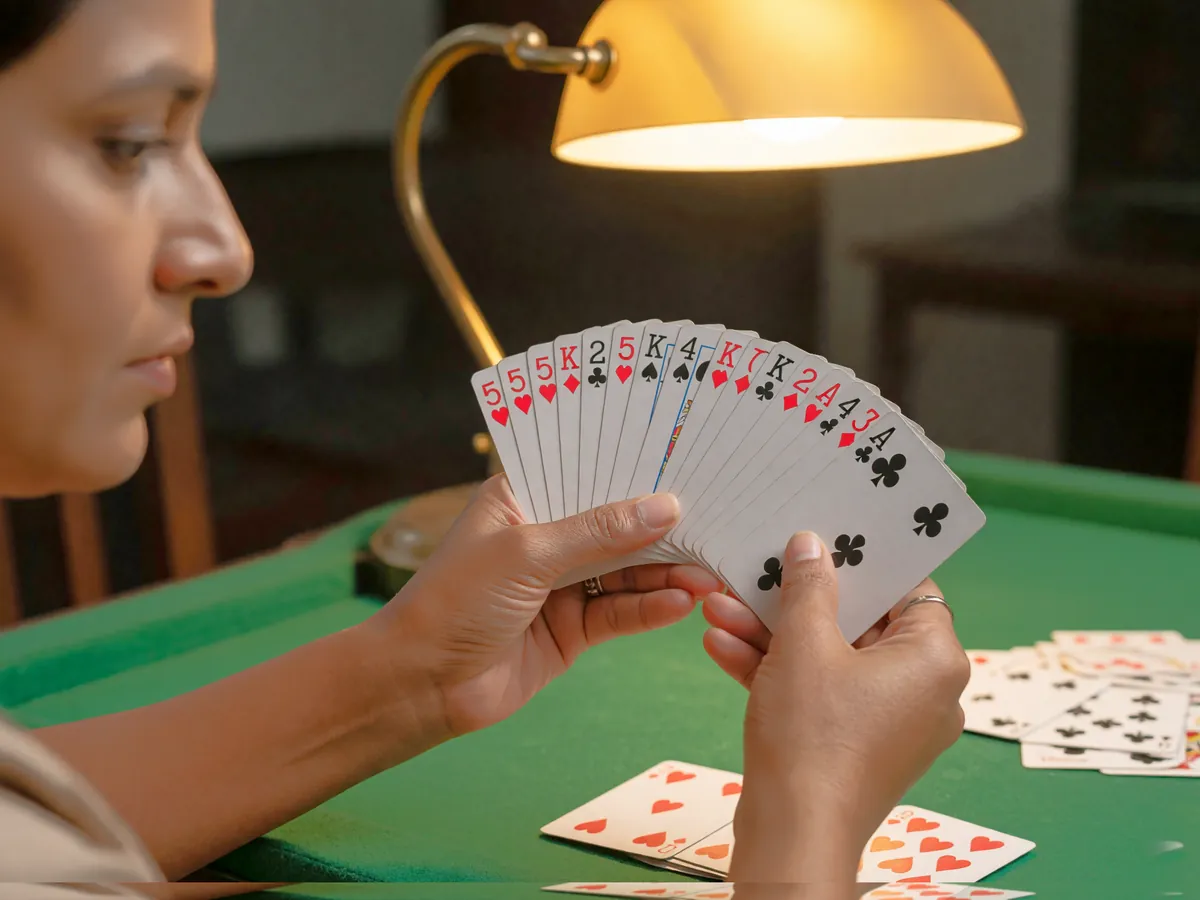
In 101 pool, a twenty-point first-drop is expensive only when you take it late and often. Early recognition of an unworkable hand is the cheapest skill in the format. Write the drop ladder on a sticky note the first few nights you play a new operator so the numbers stay visible when the discard pile starts to look tempting.
Track who is within thirty points of elimination. Those seats play differently: they first-drop more, they pick from the open deck less, and they will dump high cards earlier. Your pure chase should tighten when two seats are that close, because the table tempo compresses and middle-drops become more common.
Open with first-drops on dead hands and small builds on live ones. Your job is information: who chases, who folds early, who never looks at the open deck. Do not spend jokers defending a weak pure in this window.
Once two players sit near 70, deny connectors they have shown interest in. Prefer safe discards even if your own pure is a turn slower. Survival value rises when the pool is about to shrink.
If you are healthy under 60 and two seats are gone, tighten further. A middle-drop that preserves a winning stack beats a heroic full-count that gifts the survivor the pot.
Some rooms charge 20/40 for first and middle drops; others use 25/50. Screenshot the help screen before the first chip moves.
Readers often ask whether 201 pool is safer than 101. It is longer, not safer. The larger envelope invites loose play early, which is exactly how stacks quietly climb into the danger zone. If your weekly bankroll is modest, 101 with a hard session clock is usually the cleaner laboratory. If you prefer slower variance and can protect two hours of attention, 201 is fine — provided the drop table is confirmed before the first chip moves.
Finally, pool rummy is a social format. Table talk, emoji spam, and rush timers are part of the environment. Mute what you can, take a standing break every forty-five minutes, and do not renegotiate your walk-away time because the pool looks close. Close pools are where tired players gift points. Fresh players collect them.
Pool, points, deals and Gin — same cards, different math.
Open the variant map →Every step of a beginner hand, with the cards on the table.
Read the walkthrough →The two levers that move pool outcomes more than any other.
Open strategy →Most platforms let you observe tables before joining. Use that window — it is the cheapest lesson on the site.
Readers who return to this page after a live session should bring one artefact: a screenshot, a drop decision, or a cashier timestamp. Abstract rereading helps less than comparing your artefact to the checklists above. The goal is not to memorise every paragraph. The goal is to change one behaviour in the next session and measure whether the ledger feels cleaner.
If a paragraph here conflicts with your operator’s live help center, the help center wins for table mechanics. This desk wins for framing, safety habits, and questions to ask. Keep both tabs open the first time you try a new room. Confusion is expensive; cross-checking is cheap.
Share documented corrections with the editorial desk when you find drift. Skill-game products move. Editorial pages must move with them, and that only happens when careful readers send primary evidence instead of rumours. Thank you for treating your bankroll and your attention as finite resources worth defending.
A final reminder on pace: nothing on this website requires you to deposit today. Observation tables, offline drills, and responsible-play tools are complete activities. Real-money play is optional infrastructure for adults in permitted contexts who already have spare money and spare time — not the other way around.
Readers who return to this page after a live session should bring one artefact: a screenshot, a drop decision, or a cashier timestamp. Abstract rereading helps less than comparing your artefact to the checklists above. The goal is not to memorise every paragraph. The goal is to change one behaviour in the next session and measure whether the ledger feels cleaner.
If a paragraph here conflicts with your operator’s live help center, the help center wins for table mechanics. This desk wins for framing, safety habits, and questions to ask. Keep both tabs open the first time you try a new room. Confusion is expensive; cross-checking is cheap.
Share documented corrections with the editorial desk when you find drift. Skill-game products move. Editorial pages must move with them, and that only happens when careful readers send primary evidence instead of rumours. Thank you for treating your bankroll and your attention as finite resources worth defending.
A final reminder on pace: nothing on this website requires you to deposit today. Observation tables, offline drills, and responsible-play tools are complete activities. Real-money play is optional infrastructure for adults in permitted contexts who already have spare money and spare time — not the other way around.